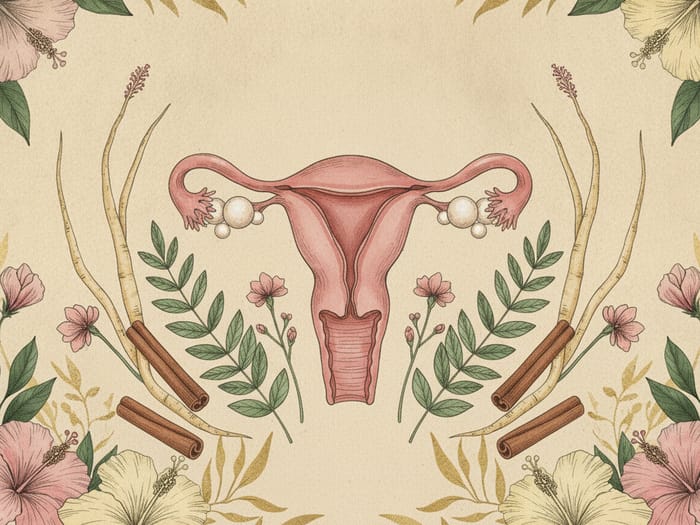
Women's health · Stree Roga

Common women's health conditions, explained gently

What each condition is, what women usually notice, and how classical Ayurveda reads it. A starting point for a calmer conversation with your doctor and with Dr. Sathya.

  • Adults 18+
  • Online, worldwide
  • Works alongside your gynaecologist

Condition guide · 01

Menstrual cycle, hormones & reproductive health

Cycle changes are often the first sign that hormones or metabolism need attention.

Polycystic Ovary Syndrome (PCOS / PCOD)
Artava Kshaya · Kapha-Vata

Polycystic Ovary Syndrome (PCOS / PCOD)

A common hormonal and metabolic condition with irregular cycles, higher androgen (male-type hormone) levels or many small ovarian follicles.

What women often notice

Skipped or unpredictable periods, unwanted hair growth, acne, weight changes or difficulty conceiving.

Ayurvedic view

Kapha and Meda (fat tissue) block the channels and weak Agni (digestive fire) disturbs Artava, the reproductive tissue.
PMS & PMDD
Artava Vyapad · Vata-Pitta

PMS & PMDD

Physical and emotional symptoms in the days before a period that ease soon after bleeding begins. PMDD is a more severe, mood-led form.

What women often notice

Bloating, breast tenderness, tiredness, mood swings, irritability or low mood that affects daily life.

Ayurvedic view

Vata brings bloating and anxiety and Pitta brings irritability and heat, both rising before the flow of Apana Vata.

Endometriosis
Udavartini Yonivyapad · Vata

Endometriosis

Tissue similar to the lining of the uterus grows outside it, for example on the ovaries, fallopian tubes or pelvic lining.

What women often notice

Painful periods, ongoing pelvic pain, pain during intercourse or bowel movements, and sometimes difficulty conceiving.

Ayurvedic view

Classically linked to Apana Vata moving against its natural downward direction (Udavarta), which brings pain.

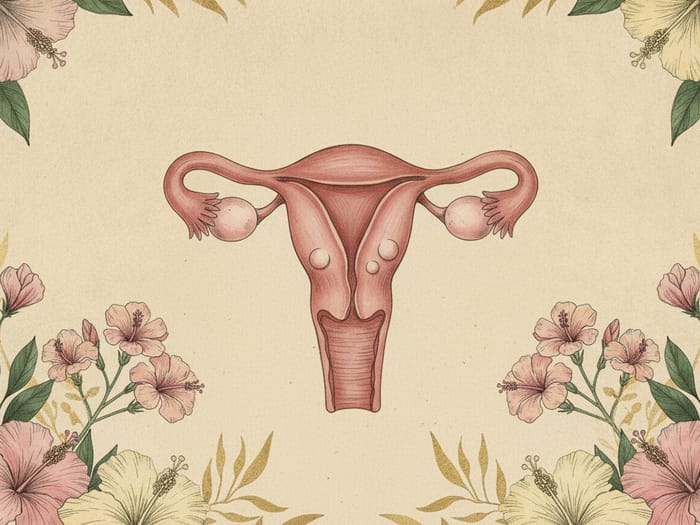
Uterine Fibroids
Garbhashaya Granthi · Kapha-Vata

Uterine Fibroids

Non-cancerous (benign) growths in or on the muscular wall of the uterus. Many cause no symptoms at all.

What women often notice

Heavy or long periods, pelvic pressure or fullness, passing urine often, or constipation.

Ayurvedic view

Granthi means a firm swelling: Kapha and Meda collect in the uterus while Vata hardens them.

Thyroid Imbalances
Galaganda · Kapha / Pitta

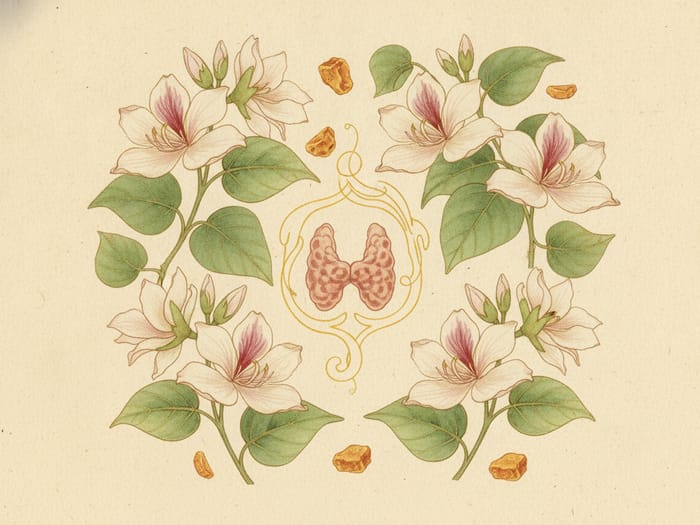
Thyroid Imbalances

An underactive thyroid (hypothyroidism) slows the body down; an overactive one (hyperthyroidism) speeds it up.

What women often notice

Underactive: tiredness, weight gain, feeling cold, constipation, dry skin, heavy periods. Overactive: fast heartbeat, heat intolerance, weight loss, anxiety, tremor, lighter periods.

Ayurvedic view

A slow thyroid is read as Kapha and Ama with low Agni; an overactive one as excess Pitta heat.

Condition guide · 02

Perimenopause, menopause & midlife transitions

A natural transition that can still bring real symptoms, and a good time to protect long-term health.

Perimenopause
Rajonivritti Sandhi · Vata-Pitta

Perimenopause

The years leading up to menopause, often from the 40s, when hormone levels rise and fall before gradually declining.

What women often notice

Changing cycle lengths, hot flushes, night sweats, broken sleep, brain fog or mood changes.

Ayurvedic view

A Sandhi (junction) of life: Pitta flares as heat and Vata rises as dryness, sleeplessness and worry.

Menopause
Rajonivritti · Vata

Menopause

Defined as 12 months in a row without a period, after which oestrogen settles at a lower level.

What women often notice

Ongoing temperature swings, vaginal dryness or discomfort, sleep changes, and longer-term changes in bone and heart health.

Ayurvedic view

The natural entry into the Vata stage of life, when nourishing Rasayana care supports the tissues.

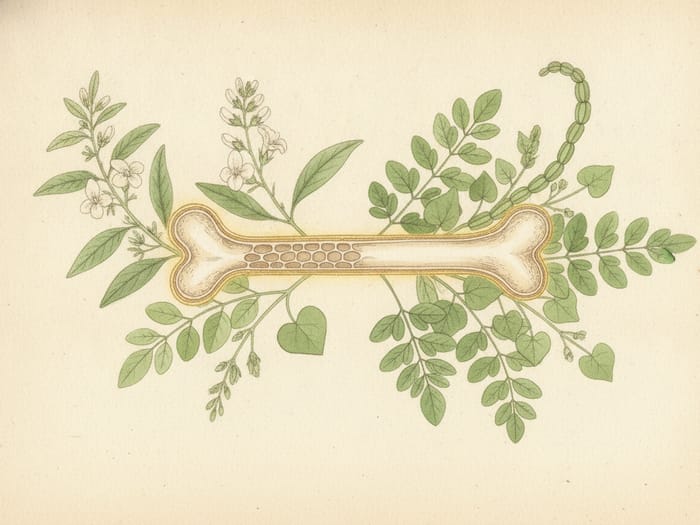
Bone Density Loss (Osteopenia & Osteoporosis)
Asthi Kshaya · Vata

Bone Density Loss (Osteopenia & Osteoporosis)

Gradual thinning of bone that speeds up after menopause as oestrogen falls, raising the risk of fractures.

What women often notice

Usually no early pain at all, which is why a bone density scan and vitamin D check are worthwhile.

Ayurvedic view

Asthi (bone tissue) and Vata share the same seat, so as Vata rises with age, the bone tissue can thin.

Condition guide · 03

Gut, pelvic & urogynaecological health

Digestion, the bladder and the pelvic floor are closely linked, and often affected by hormones and stress.

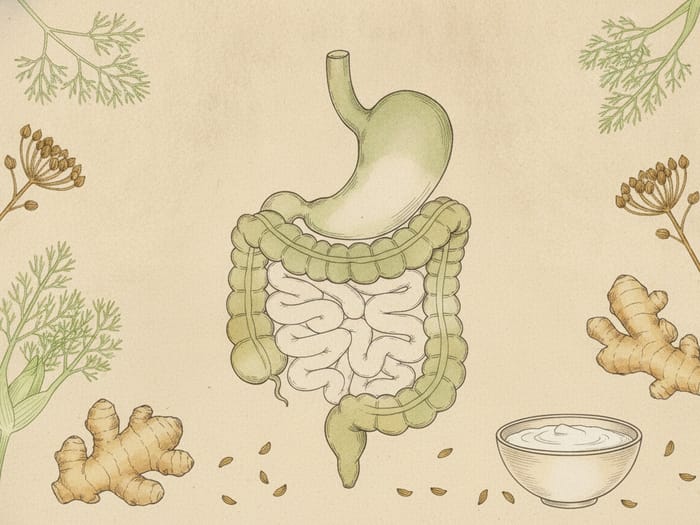
Irritable Bowel Syndrome (IBS)
Grahani · Vata, weak Agni

Irritable Bowel Syndrome (IBS)

A functional gut condition that often flares around the period or at times of high stress.

What women often notice

Cramping, bloating, gas, and constipation and diarrhoea that come and go.

Ayurvedic view

Grahani is the seat of Agni: when digestion is unsteady, Vata disturbs the bowel rhythm.

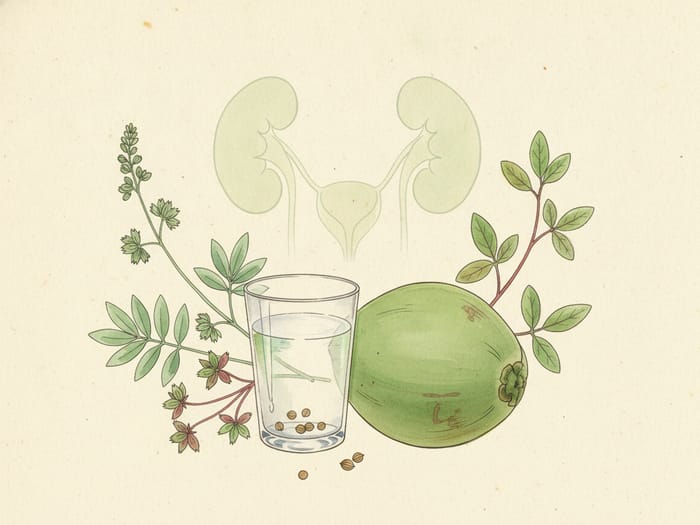
Urinary Tract Infections (UTIs)
Mutrakrichra · Pitta

Urinary Tract Infections (UTIs)

Bacterial infections of the urinary tract. They need prompt medical testing and treatment.

What women often notice

Burning when passing urine, needing to go often or urgently, cloudy or strong-smelling urine, or lower tummy discomfort.

Ayurvedic view

Mutrakrichra means painful urination, described mostly as Pitta heat in the urinary channels.

Pelvic Floor Dysfunction & Leakage
Apana Vata Dushti · Vata

Pelvic Floor Dysfunction & Leakage

Weak, tight or poorly coordinated pelvic floor muscles, often after childbirth, with age or long-term straining.

What women often notice

Leaking urine when coughing, sneezing or exercising, or a feeling of heaviness or pressure.

Ayurvedic view

Apana Vata governs everything that moves downward; when it weakens, holding and releasing become harder.

Condition guide · 04

Energy, stress, sleep & autoimmune wellness

Ongoing tiredness has many roots. Finding the right one matters more than pushing through.

Iron Deficiency & Anaemia
Pandu · Pitta

Iron Deficiency & Anaemia

Low iron stores or fewer red blood cells, often from heavy periods, pregnancy or low intake or absorption.

What women often notice

Lasting tiredness, pale skin, breathlessness on effort, dizziness or low stamina.

Ayurvedic view

Pandu means pallor: disturbed Pitta and weak Agni leave Rakta (blood tissue) poorly nourished.

Chronic Stress, Burnout & Insomnia
Anidra & Chittodvega · Vata

Chronic Stress, Burnout & Insomnia

Ongoing mental or physical strain that unsettles sleep, focus, digestion and cycle regularity.

What women often notice

Trouble falling or staying asleep, daytime fog, a racing mind, and digestion or periods going off track.

Ayurvedic view

Anidra (sleeplessness) and Chittodvega (an anxious mind) come from Vata, calmed by routine, warmth and oil.

Autoimmune Conditions
Ama & Ojas Kshaya · Tridosha

Autoimmune Conditions

The immune system targets healthy tissue, as in Hashimoto's thyroiditis, rheumatoid arthritis or lupus. Specialist care is essential.

What women often notice

Fatigue that comes and goes, joint stiffness or aches, skin rashes or hair shedding.

Ayurvedic view

Ama (undigested toxins) and low Ojas (vital immunity) are the classical view; Ayurveda works alongside your specialist.

Please see a doctor promptly if you have

  • Very heavy bleeding, soaking a pad every hour, or bleeding after menopause
  • Sudden, severe pelvic or tummy pain, or fever with pelvic pain
  • Burning urine with fever, back pain or blood in the urine
  • Chest pain, fainting or a racing heartbeat that does not settle
  • A possible pregnancy with pain or bleeding

This guide is general education, not a diagnosis or treatment plan. Ayurvedic care is always personalised after a consultation and works alongside your own doctor.

Book a consultation

Quality assurance & herbal standardization

Uncompromising Purity: Standardized Formulations & Global Clinical Standards

Bridging 3,000-year-old classical Ayurvedic pharmacopeia with rigorous international safety, quality, and laboratory testing protocols.

years of classical pharmacopeia
3,000+years of classical pharmacopeia
years of clinical practice
33+years of clinical practice
batches with a COA
100%batches with a COA
01

Manufacturing

WHO-GMP Certified Manufacturing

Every herbal formulation is produced in Good Manufacturing Practice (GMP) compliant facilities adhering to World Health Organization guidelines for purity and batch consistency.

  • Batch-coded traceability
  • Validated processes
  • Classical preparation methods
02

Quality systems

ISO 9001:2015 & HACCP Quality Assurance

End-to-end quality management and hazard analysis protocols ensuring zero microbial contamination, strict hygiene, and international clinical safety.

  • Microbial limit testing
  • Hazard control points
  • Audited hygiene
03

Laboratory

Standardized Phytochemical Potency

Verified active marker compounds, heavy-metal free lab screening (ICP-MS tested), and pesticide-free wildcrafted & organic botanical sourcing.

  • Marker compound assay
  • ICP-MS heavy metals
  • Pesticide residue screen
04

Regulatory

Regulatory & Clinical Compliance

Formulated under licensed Ayurvedic medical supervision, compliant with international wellness regulations, and backed by transparent Certificate of Analysis (COA) documentation.

  • Physician supervised
  • COA for every batch
  • International compliance

Trust & accreditation

  • GMP Certified
  • 100% Organic Botanicals
  • Lab-Tested Heavy Metal Free
  • Cruelty-Free
  • ISO Certified
  • Physician Formulated

Have a batch number? Request its lab report.

Verify a Certificate of Analysis