Skin health · Twak Roga

Common skin conditions, through two lenses

For each condition: the modern clinical picture, its classical Ayurvedic name, and Samprapti, the way Ayurveda explains how the imbalance develops. A clear starting point before your consultation with Dr. Sathya.

  • Adults 18+
  • Online, worldwide
  • Works alongside your dermatologist

Skin guide · 01

Papulosquamous & scaling conditions

Raised, scaly patches where skin renews too fast or reacts to oil and yeast on the surface.

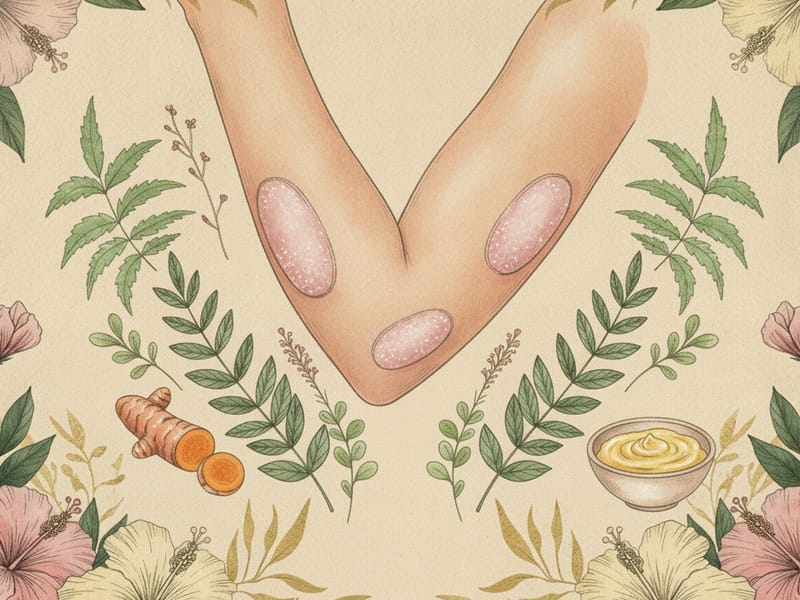
Psoriasis
Kitibha · Sidhma · Ekakushtha Vata-Kapha · Pitta-Rakta in flares

Psoriasis

Modern clinical picture

A long-term, immune-driven condition where skin cells grow too fast. It forms clearly outlined red plaques with silvery-white scales, often on the elbows, knees, scalp and lower back. Nail pitting can occur, and some people develop joint pain (psoriatic arthritis).

Ayurveda & Samprapti

Seen as Kushtha (Kshudra or Maha Kushtha, depending on how long it has lasted and how it looks). Incompatible or heavy food (Viruddha Ahara), day sleep and suppressed urges disturb all three doshas. Vata gives dryness and scaling, Kapha gives thickening and plaques, and Pitta-Rakta drives active flares. Twak, Rakta, Mamsa and Lasika are affected, with Srotorodha (blocked channels) and weak Bhrajaka Pitta.
Seborrheic dermatitis
Darunaka · Kapalika (overlap) Vata-Kapha · Pitta heat

Seborrheic dermatitis

Modern clinical picture

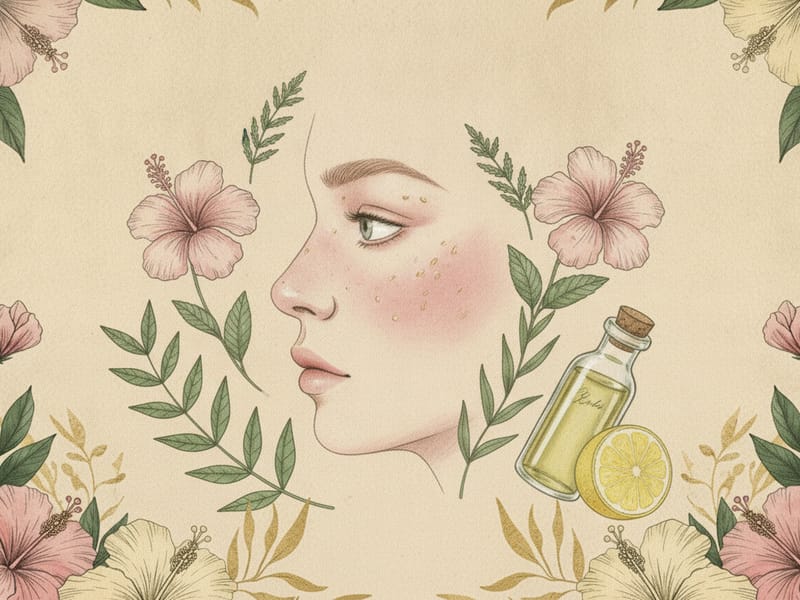
Recurring red patches with greasy or flaky scales in oily areas: the scalp, sides of the nose, eyebrows, behind the ears and the central chest. It is linked to oil-gland activity, a weaker skin barrier and the skin's reaction to Malassezia yeast.

Ayurveda & Samprapti

On the scalp it matches Darunaka (scaling, itching, dryness, cracking and hair fall). On the face and trunk it reads as Vicharchika or Pitta-Kapha imbalance. Vata and Kapha, often with Pitta heat, disturb local Meda (fat and sebum) and Bhrajaka Pitta, giving oily or flaky scales and irritation.

Skin guide · 02

Eczema & skin sensitivity

An itchy, inflamed skin barrier, from inside (atopic) or from something the skin has touched.

Atopic dermatitis & eczema
Vicharchika · Charmadala Kapha (ooze, itch) · Pitta (redness) · Vata (dryness)

Atopic dermatitis & eczema

Modern clinical picture

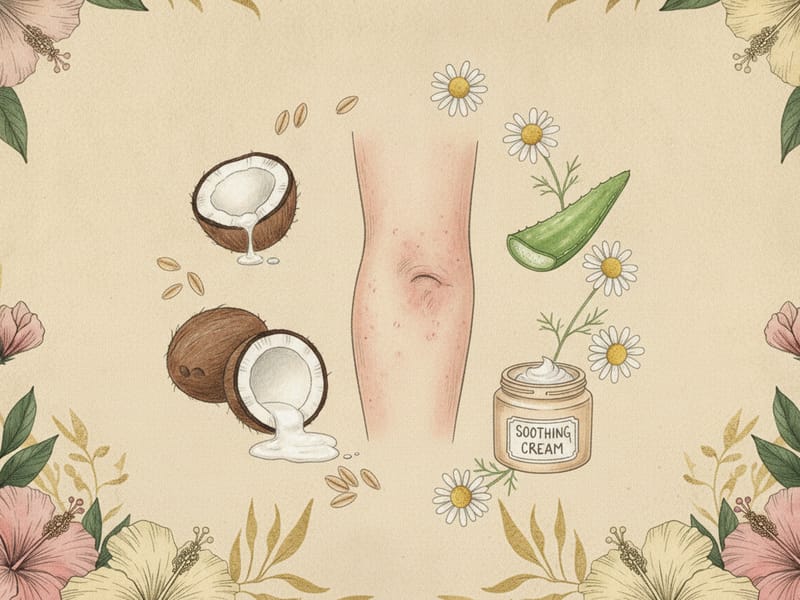
A very itchy, relapsing condition caused by a weak skin barrier and an over-reactive immune response. Skin is dry and red. Early flares may ooze or blister, while long-standing patches become thick and leathery (lichenified).

Ayurveda & Samprapti

Vicharchika classically shows Kandu (intense itching), Pidaka (small bumps or blisters), Shyava (dusky colour) and Bahusrava (oozing) in the wet stage. It turns dry, thick and scaly as Vata rises. Kapha drives oozing and itch, Pitta drives redness and burning, and Vata drives roughness, cracks and chronicity.

Contact dermatitis (allergic & irritant)
Utkotha · Sheetapitta · Asatmya Sparsha Pitta-Rakta · Vata

Contact dermatitis (allergic & irritant)

Modern clinical picture

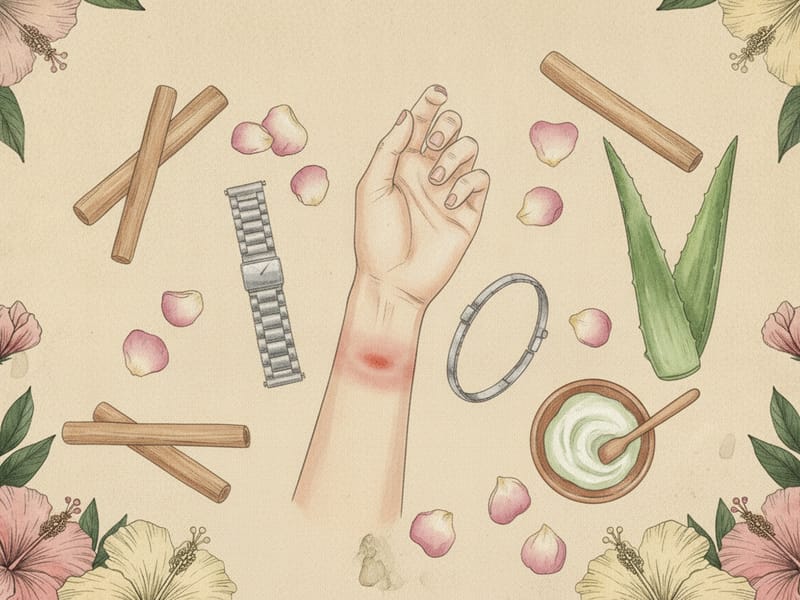
A rash caused by something touching the skin. Irritant type comes from direct damage (harsh soaps, detergents). Allergic type is a delayed reaction to metals, fragrances, preservatives, dyes or plants. It shows redness, swelling, blisters, scaling or itch at or around the contact area.

Ayurveda & Samprapti

An Agantuja (external) cause: the trigger acts like Garavisha or Dooshivisha, or an unsuitable contact (Asatmya Sparsha). It provokes Pitta-Rakta and Vata in Twak and Rakta, giving Daha (burning), Raga (redness), Kandu (itching) and Pidaka (eruptions).

Hives (urticaria, nettle rash)
Sheetapitta · Udarda · Kotha · Utkotha Vata-Kapha · Pitta · Ama

Hives (urticaria, nettle rash)

Modern clinical picture

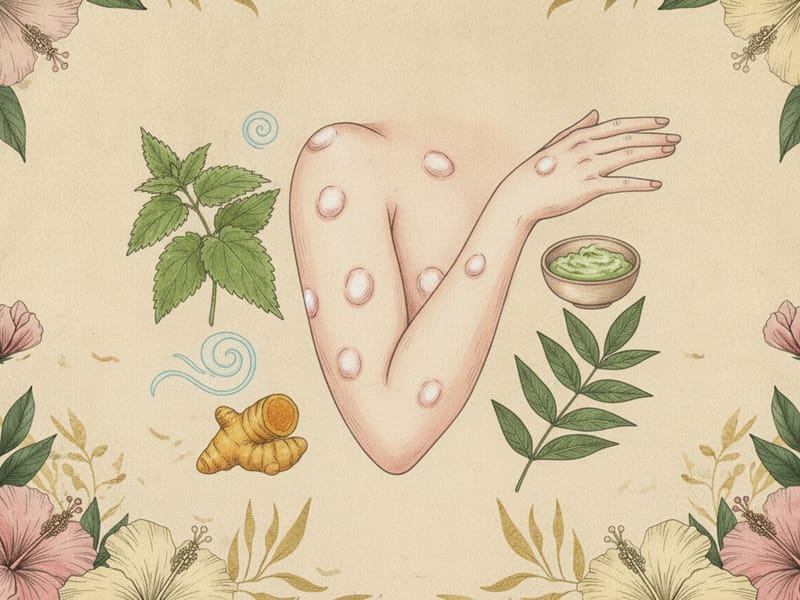
Raised, itchy wheals (welts) that are red or skin-coloured, come and go within hours and can appear anywhere. The name comes from Urtica, Latin for stinging nettle. Acute urticaria lasts under 6 weeks. Chronic spontaneous (idiopathic) urticaria lasts 6 weeks or more without an obvious trigger. Physical or inducible types are set off by cold, heat, pressure, vibration, sunlight or water, for example dermatographism (wheals from scratching) or cholinergic urticaria (from sweating or exercise). It is often loosely called an allergic rash or heat rash, but it is different from miliaria.

Ayurveda & Samprapti

Sheetapitta: mainly Vata-Kapha, often brought on by cold air or wind. Udarda: Kapha-dominant raised, itchy wheals with a central dip. Kotha: short-lived, widespread allergic wheals, often linked to Ama or incomplete purification (Vamana). Utkotha: recurrent or chronic urticarial eruptions. Vata and Kapha, with Pitta, spread through Twak and Rakta, giving Kandu (itching), Daha (burning) and Toda (pricking).

Skin guide · 03

Pigment & autoimmune skin conditions

When the immune system affects skin colour, texture or hair follicles.

Vitiligo
Shwitra · Kilasa Tridosha · Bhrajaka Pitta

Vitiligo

Modern clinical picture

The immune system damages the skin's pigment cells (melanocytes), leaving clearly outlined white patches. The skin texture stays normal. It can go along with other autoimmune conditions, such as thyroid disease.

Ayurveda & Samprapti

Shwitra and Kilasa describe loss of normal skin colour (Varna-nashana) without discharge. All three doshas are involved, especially Bhrajaka Pitta, which gives skin its colour and glow, along with Rakta, Mamsa and Meda. Viruddha Ahara and unwholesome habits can worsen it. Classically, deeper Dhatu involvement (Mamsa, Meda) is slower to respond than Rakta-level change.

Cutaneous lupus & lichen planus
Rakta-Pitta · Kushtha · Visarpa · Charmakila Pitta-Rakta · Ama

Cutaneous lupus & lichen planus

Modern clinical picture

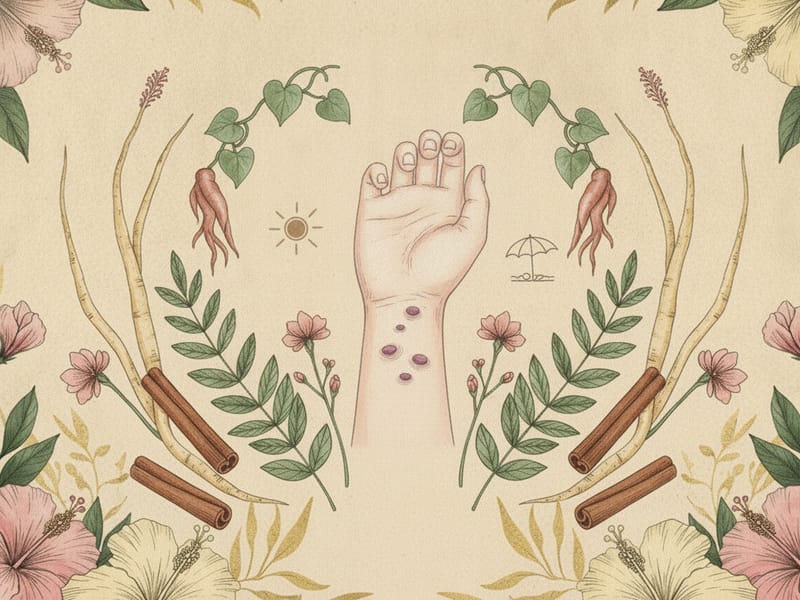
Skin lupus (such as discoid lupus) forms red, scaly plaques on sun-exposed skin that can leave colour change and scarring. Lichen planus shows itchy, flat, violet bumps with fine white lines (Wickham striae) on wrists, ankles, inside the mouth or on the scalp, where it can cause scarring hair loss (lichen planopilaris).

Ayurveda & Samprapti

Understood through Rakta-Pitta imbalance, Ama (metabolic and immune disturbance) and Kushtha principles. Long-term inflammation alters Twak and Rakta. In follicular and scarring forms it injures the Roma-kupa (hair follicles), so hair may not regrow.

Skin guide · 04

Acne & oil-gland conditions

Blocked, inflamed oil glands, most common in youth but often seen in adults too.

Acne
Yauvanapidaka · Mukhadushika Kapha-Vata · Rakta-Pitta

Acne

Modern clinical picture

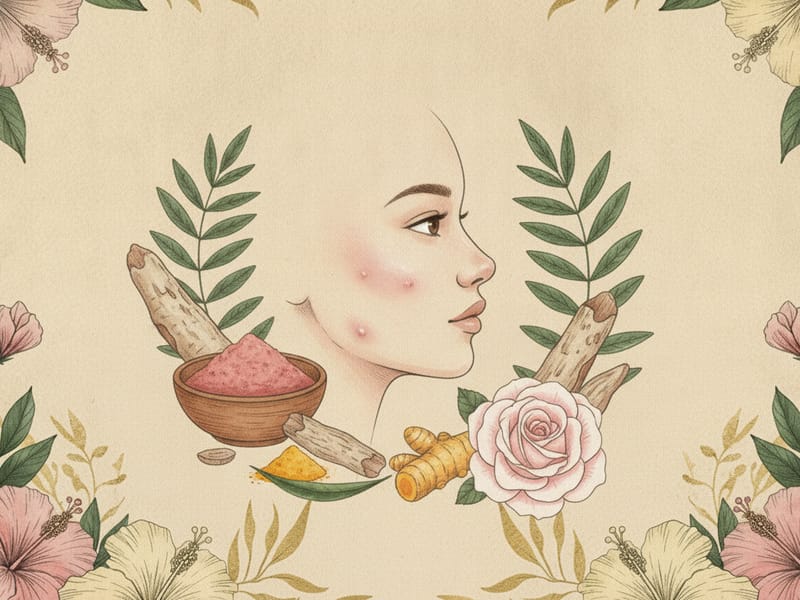
Inflammation of the hair follicle and oil gland, driven by hormones that raise oil production, blocked pores and the skin bacterium C. acnes. It shows blackheads, whiteheads, red bumps, pus spots or deep nodules, and can leave redness, dark marks or scars.

Ayurveda & Samprapti

Yauvanapidaka (also Mukhadushika) is most common in youth. Kapha and Meda add oiliness and blocked ducts, Pitta-Rakta add redness and pus, and Vata gives the firm, thorn-like bumps (Shalmali-kantaka-prakhya) and pain.

Skin guide · 05

Skin infections

Fungal and bacterial infections that spread with heat, sweat and close contact, and may need prompt medicine.

Fungal infection (tinea, ringworm)
Dadru Kapha-Pitta · Kleda

Fungal infection (tinea, ringworm)

Modern clinical picture

A dermatophyte fungus (Trichophyton, Microsporum, Epidermophyton) infects the outer skin, hair or nails. It makes ring-shaped, scaly, itchy patches with a spreading edge and a clearer centre. It spreads easily and usually needs antifungal treatment.

Ayurveda & Samprapti

Dadru is a Kshudra Kushtha with Kandu (itching), Raga (redness), Pidaka (eruptions) and Mandala (round patches with raised, spreading edges). Kapha and Pitta affect Twak and Rakta, worsened by heat, sweat and moisture (Kleda), hygiene and diet.

Folliculitis, boils & impetigo
Pidaka · Vidradhi · Kacchu Kapha-Pitta · Rakta

Folliculitis, boils & impetigo

Modern clinical picture

Bacterial infections, usually Staphylococcus aureus or Streptococcus. Folliculitis shows small pus spots at hair roots, boils are tender, deep lumps, and impetigo shows honey-coloured crusts or blisters. They often need prompt antibiotic treatment from a doctor.

Ayurveda & Samprapti

Kapha-Pitta and Rakta imbalance produces Paka (pus formation), Shopha (swelling), Daha (burning) and Pidaka (boils). Classical texts also call for timely treatment, especially with fever or deep spread.

Please see a doctor promptly if you have

  • A rash with fever, or skin that is spreading red, hot and painful
  • Blistering or peeling over a large area, or sores in the mouth or eyes
  • Swelling of the lips, face or tongue, or difficulty breathing
  • A boil that keeps growing, or many boils at once
  • A mole or spot that changes shape or colour, bleeds or does not heal

This guide is general education, not a diagnosis or treatment plan. Infections often need medicine from your doctor. Ayurvedic care is always personalised after a consultation and works alongside your dermatologist.

Book a consultation

Quality assurance & herbal standardization

Uncompromising Purity: Standardized Formulations & Global Clinical Standards

Bridging 3,000-year-old classical Ayurvedic pharmacopeia with rigorous international safety, quality, and laboratory testing protocols.

years of classical pharmacopeia
3,000+years of classical pharmacopeia
years of clinical practice
33+years of clinical practice
batches with a COA
100%batches with a COA
01

Manufacturing

WHO-GMP Certified Manufacturing

Every herbal formulation is produced in Good Manufacturing Practice (GMP) compliant facilities adhering to World Health Organization guidelines for purity and batch consistency.

  • Batch-coded traceability
  • Validated processes
  • Classical preparation methods
02

Quality systems

ISO 9001:2015 & HACCP Quality Assurance

End-to-end quality management and hazard analysis protocols ensuring zero microbial contamination, strict hygiene, and international clinical safety.

  • Microbial limit testing
  • Hazard control points
  • Audited hygiene
03

Laboratory

Standardized Phytochemical Potency

Verified active marker compounds, heavy-metal free lab screening (ICP-MS tested), and pesticide-free wildcrafted & organic botanical sourcing.

  • Marker compound assay
  • ICP-MS heavy metals
  • Pesticide residue screen
04

Regulatory

Regulatory & Clinical Compliance

Formulated under licensed Ayurvedic medical supervision, compliant with international wellness regulations, and backed by transparent Certificate of Analysis (COA) documentation.

  • Physician supervised
  • COA for every batch
  • International compliance

Trust & accreditation

  • GMP Certified
  • 100% Organic Botanicals
  • Lab-Tested Heavy Metal Free
  • Cruelty-Free
  • ISO Certified
  • Physician Formulated

Have a batch number? Request its lab report.

Verify a Certificate of Analysis