
The Ayurvedic Kitchen
All courses

All levels course

The Ayurvedic Kitchen

Cook simple Kerala-style meals that heal digestion

Food is the first medicine in Ayurveda. Cook alongside Dr. Sathya as he shares the spices, techniques and everyday recipes he prescribes to patients, from kitchari to digestive teas.

No special equipment needed, just a good pan and a spice box.

You will learn

  • Stock an Ayurvedic spice box and pantry
  • Cook kitchari, rasam and three Kerala thorans
  • Brew teas for digestion, sleep and immunity
  • Plan meals around your dosha and the seasons

Sessions28 sessions · 21 h

  1. 1. Ahara: food as the first medicineFree preview

    Why Ayurveda calls food Mahabhaishajya, the great medicine, and what this course covers.

    45 min
  2. 2. The five elements in food

    Reading food through space, air, fire, water and earth.

    45 min
  3. 3. How food affects Vata, Pitta and Kapha

    The qualities of food and the rule of like increases like.

    45 min
  4. 4. The six tastes (Shad Rasa)

    Sweet, sour, salty, pungent, bitter and astringent, their elements and effects.

    45 min
  5. 5. Virya, Vipaka and Prabhava

    Heating or cooling potency, post-digestive effect, and special actions of food.

    45 min
  6. 6. Agni and the stages of digestion

    Jatharagni, Bhutagni and Dhatvagni: digestion from the stomach to the tissues.

    45 min
  7. 7. Basic biochemistry of food

    Macronutrients, micronutrients and water: what food is made of.

    45 min
  8. 8. Carbohydrates: sugars, starch and fibre

    Simple and complex carbohydrates, glycaemic index, and the Ayurvedic sweet taste.

    45 min
  9. 9. Proteins and amino acids

    Why we need protein, complete and incomplete sources, and pulses in Ayurveda.

    45 min
  10. 10. Fats, oils and ghee

    Saturated, unsaturated and essential fatty acids, and the role of Sneha in Ayurveda.

    45 min
  11. 11. Enzymes and metabolism

    How digestive enzymes break food down, and the link with Agni.

    45 min
  12. 12. Vitamins and minerals

    Water- and fat-soluble vitamins, key minerals, and where to find them.

    45 min
  13. 13. Spices and phytochemicals

    The active compounds in turmeric, ginger, pepper and other kitchen spices.

    45 min
  14. 14. Your Ayurvedic spice box

    Stocking and storing spices, and how to temper them in ghee or oil (Tadka).

    45 min
  15. 15. How cooking changes food

    Heat, water and time: what happens to starch, protein and vitamins.

    45 min
  16. 16. Browning, frying and reheating

    The Maillard reaction, oil smoke points, and why Ayurveda warns against stale and reheated food.

    45 min
  17. 17. Soaking, sprouting and fermentation

    How these traditional methods change nutrients, and when Ayurveda advises caution.

    45 min
  18. 18. Incompatible foods (Viruddha Ahara)

    Classical food combinations to avoid, and what modern science says.

    45 min
  19. 19. Cooking class: healing kitchari

    The classic mung dal and rice one-pot, with variations for each dosha.

    45 min
  20. 20. Cooking class: dals, rasam and soups

    Light, digestive dishes for everyday meals and recovery.

    45 min
  21. 21. Cooking class: Kerala vegetables

    Thoran, avial and olan: coconut-based vegetable dishes and how to keep nutrients.

    45 min
  22. 22. Cooking class: grains and millets

    Rice, wheat, ragi, foxtail millet and oats, and how to cook them for easy digestion.

    45 min
  23. 23. Cooking class: teas, buttermilk and drinks

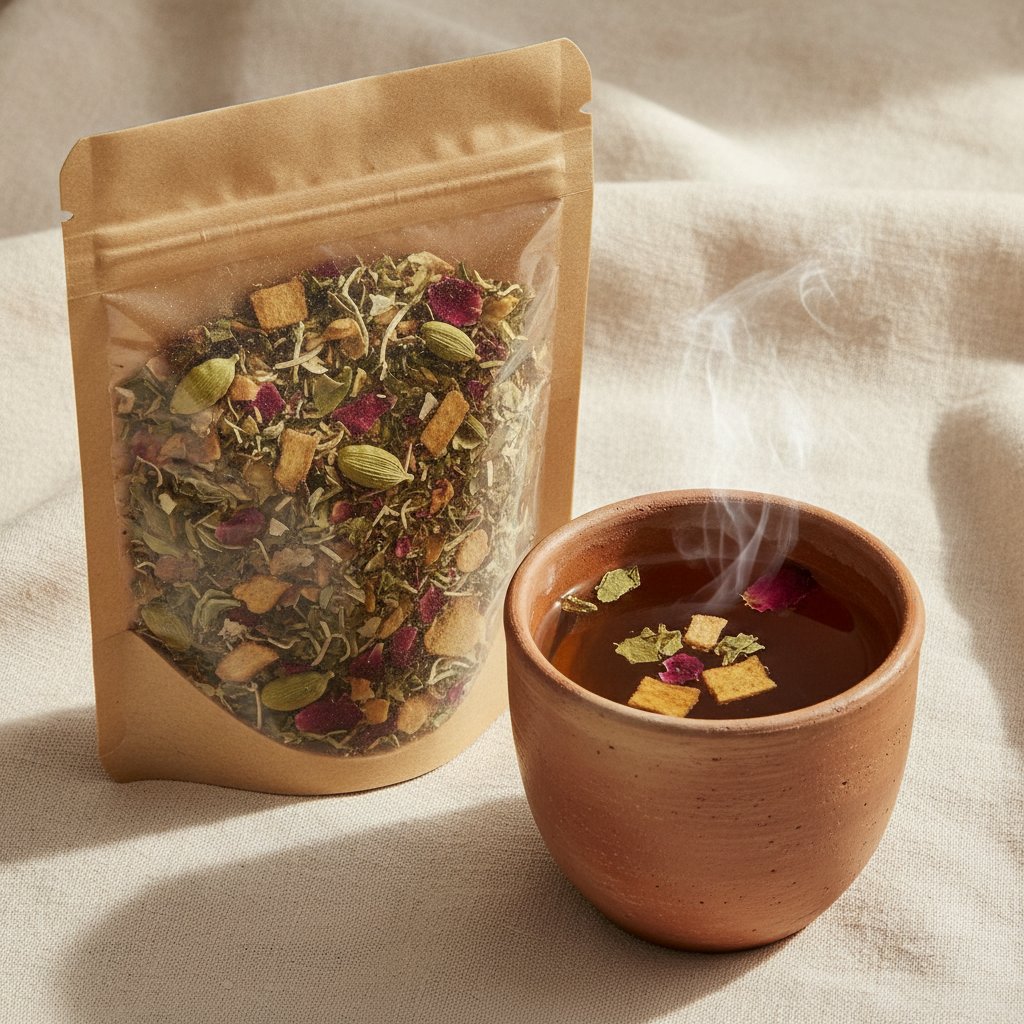
    CCF tea, ginger-tulsi tea, spiced buttermilk and cooling summer drinks.

    45 min
  24. 24. Nutrition management: assessing your diet

    Food diaries, portion sizes and the Ayurvedic rule of thirds.

    45 min
  25. 25. Nutrition through life stages

    Children, adults, pregnancy and older age: changing needs and Ayurvedic care.

    45 min
  26. 26. Food and lifestyle conditions

    General food guidance for blood sugar, weight, cholesterol and blood pressure.

    45 min
  27. 27. Seasonal cooking (Ritu Ahara)

    Adjusting the menu for hot summers, cooler months and the change between them.

    45 min
  28. 28. Your personal Ayurvedic meal plan

    Designing a weekly menu for your dosha, family and season.

    45 min

Quality assurance & herbal standardization

Uncompromising Purity: Standardized Formulations & Global Clinical Standards

Bridging 3,000-year-old classical Ayurvedic pharmacopeia with rigorous international safety, quality, and laboratory testing protocols.

years of classical pharmacopeia
3,000+years of classical pharmacopeia
years of clinical practice
33+years of clinical practice
batches with a COA
100%batches with a COA
01

Manufacturing

WHO-GMP Certified Manufacturing

Every herbal formulation is produced in Good Manufacturing Practice (GMP) compliant facilities adhering to World Health Organization guidelines for purity and batch consistency.

  • Batch-coded traceability
  • Validated processes
  • Classical preparation methods
02

Quality systems

ISO 9001:2015 & HACCP Quality Assurance

End-to-end quality management and hazard analysis protocols ensuring zero microbial contamination, strict hygiene, and international clinical safety.

  • Microbial limit testing
  • Hazard control points
  • Audited hygiene
03

Laboratory

Standardized Phytochemical Potency

Verified active marker compounds, heavy-metal free lab screening (ICP-MS tested), and pesticide-free wildcrafted & organic botanical sourcing.

  • Marker compound assay
  • ICP-MS heavy metals
  • Pesticide residue screen
04

Regulatory

Regulatory & Clinical Compliance

Formulated under licensed Ayurvedic medical supervision, compliant with international wellness regulations, and backed by transparent Certificate of Analysis (COA) documentation.

  • Physician supervised
  • COA for every batch
  • International compliance

Trust & accreditation

  • GMP Certified
  • 100% Organic Botanicals
  • Lab-Tested Heavy Metal Free
  • Cruelty-Free
  • ISO Certified
  • Physician Formulated

Have a batch number? Request its lab report.

Verify a Certificate of Analysis